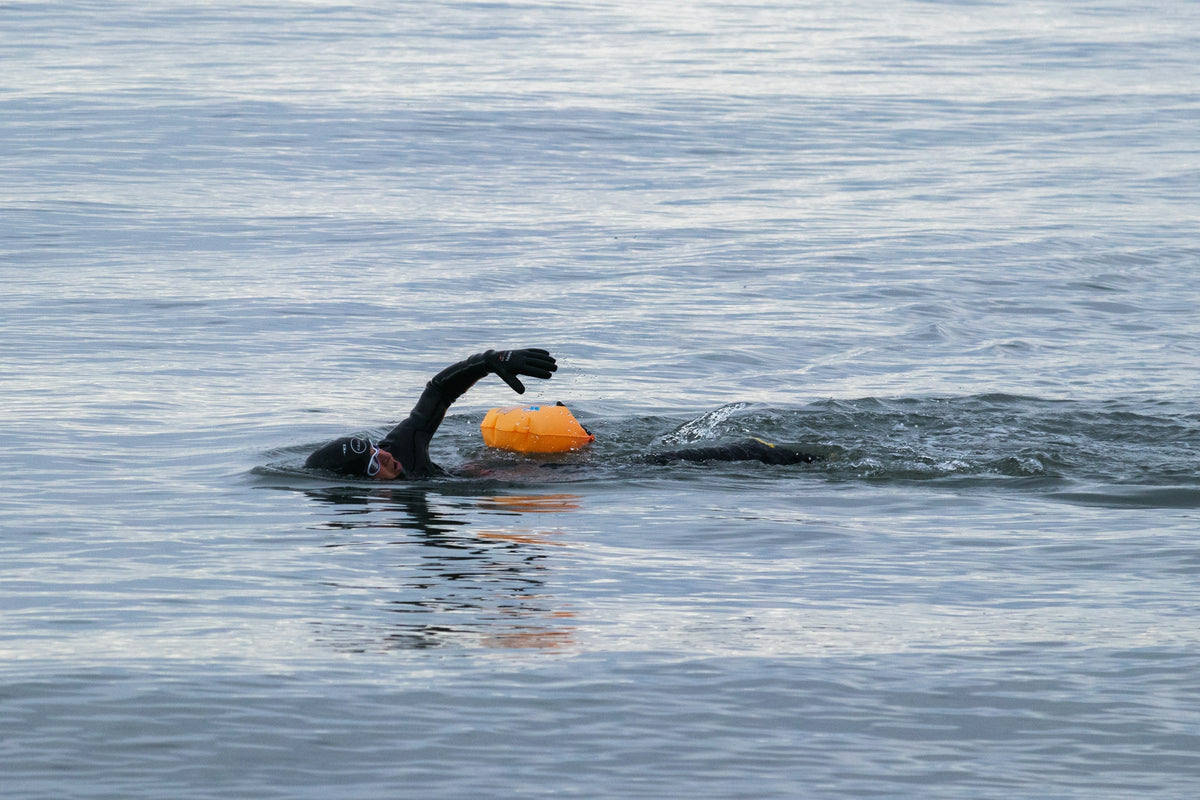
Reading the Water
Ten minutes on the sand before the first stroke.
Reading the water means finding three things before you get in: where the rip is, how the waves are breaking on the sand, and how cold the water is. Each one has a sign you can see from the beach, and each has one rule.

HOW TO SPOT A RIP CURRENT
Rob Brander, a coastal scientist at the University of New South Wales, likes to stand on a beach with a camera and ask whether you would go in. The water in front of him is calm. "The rip is channelised and is flowing out through the big, wide dark gap between breaking waves," he told the Manning River Times on January 1, 2026. The calm patch is the current. The white water on either side of it is the safe water, and it fools confident swimmers every summer.
Pools teach swimming, not water. In the sea, waves push water up the beach and it has to get back out, so it finds a channel. That channel is a rip. A typical one runs one to two feet a second. Some have been measured at eight feet a second, faster than an Olympic freestyler. That speed is why rips are behind more than eight in ten surf rescues in the United States. A rip drags nobody under. It carries people out faster than most can swim back, and they wear themselves out trying.

A beach without a lifeguard is not a swimming beach. Flags mean different things in different countries. A red one closes the water in France and only warns you in the United States. Ask what they mean where you are standing, then swim between the pair.
IF A RIP TAKES YOU
Do not swim against it. Roll onto your back and float. Most rips weaken past the breakers, and some curl back toward the beach on their own, so let it carry you and keep your eyes on the sand.
When you have your breath back, swim parallel to the shore. Rips are usually narrow, and a few strokes sideways is often all it takes before you can angle in with the waves. If you cannot get clear, keep floating, face the beach, put one arm up and shout.
That is what six people did at Scarborough, on the English North Sea coast, in July 2021, when a rip opened just outside the flagged area and took three swimmers and three surfers at once. Carolina Clements, an RNLI lifeguard one month into the job, paddled out on a rescue board and told them to float, then guided them sideways out of the channel. "It was essential that the six adults stuck in the rip raised their hands and shouted for help," her supervisor, Tom Pratt, said afterward.
SHORE BREAK
Shore break is a wave that breaks straight onto the sand, with no sandbar farther out to take the force first. Never dive into it, and never turn your back on it.

Over three summers the emergency room serving the Delaware beaches logged more than a thousand injuries from the surf zone, most of them in under two feet of water, many to people wading back to the beach when a wave caught them from behind. Walk out facing the sea, so that when a wave stands up in front of you, you see it coming and go under it.
COLD WATER
Below about 59°F (15°C), the first breath on entry is a gasp you do not choose, and if your face is under when it comes, the gasp can pull water into the lungs.
Gordon Giesbrecht of the University of Manitoba, who spent his career timing it in cold water, often on himself, told CTV Winnipeg in January 2025, the week he retired: "The main part there is the first minute, if you can survive the first minute, you should be okay." After that you have about ten minutes of useful movement, and about an hour before the cold reaches the core. We wrote the long version in Before the First Stroke.
Walk in to the waist and stop. Stand there with your hands on the surface until the breathing settles. Then go.