

Article: Shangri-La, Paris
Shangri-La, Paris
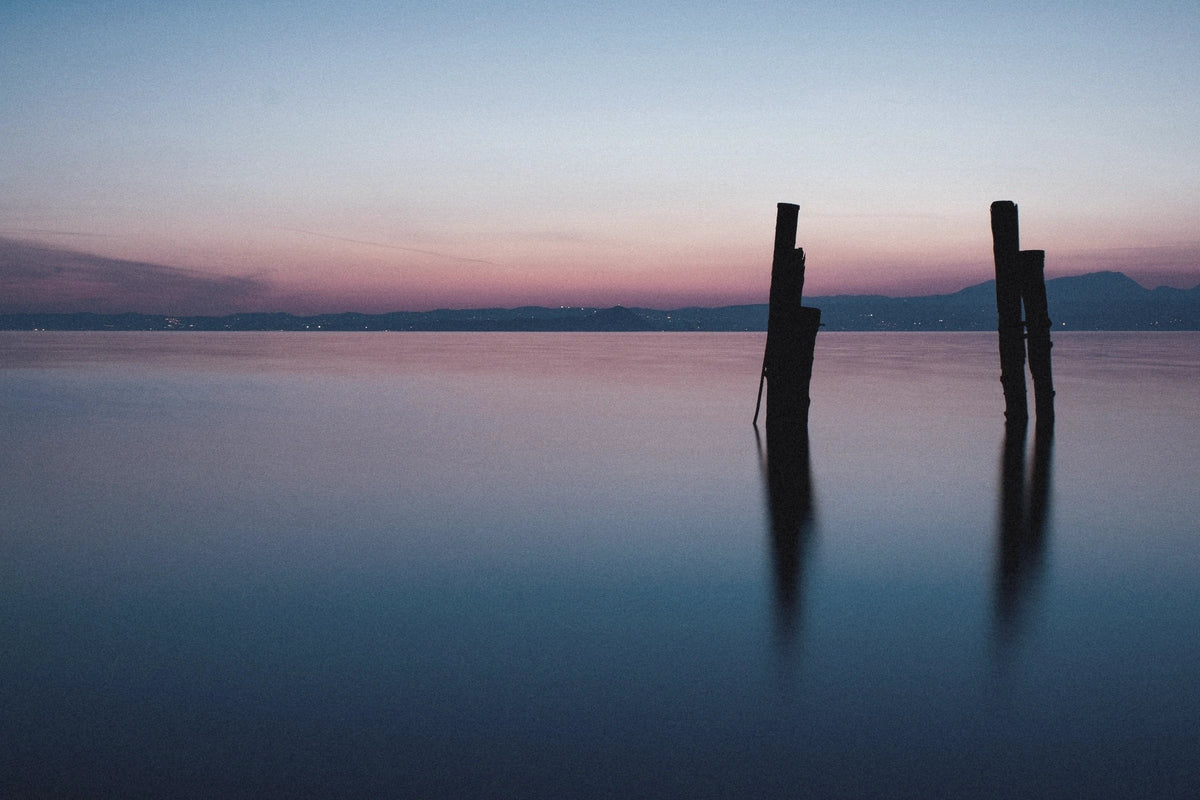
A pool in a prince's stables, across the river from the tower.
THE PLACES THAT CARRY US · 10
On December 30, 1900, Roland Bonaparte took the orchids out of a Christmas basket and pressed them. The sheet is still in the collection, in Lyon, dated to the day. He was forty-two, a grandson of Lucien Bonaparte, and the house he had finished four years earlier on the avenue d'Iéna was built around that habit: the ground floor for boxes of dried plants, the library at the heart of it, stables for the horses. An 1886 law had shut the army to families that had once reigned, so he turned to plants. He bought the plot on the Chaillot hill in 1891, when the iron tower across the river was two years old and a good part of Paris still wanted the tower taken down, and the architect Ernest Janty gave him a stone house with a grand staircase and the imperial bees worked into the decor. Collectors on every continent sent him specimens, and he kept gathering his own. One sheet in Lyon holds a grass he picked in 1918 on the Champs-Élysées, from the trail of a 77 millimeter field gun parked on the avenue. By his death in 1924 the herbarium ran to some three million specimens, close to half the flowering plant species on earth, and the university that keeps it calls it the largest collection of dried plants ever assembled by one person. Moving it to Lyon took twenty-two railway wagons.

The pool is in those stables, in what the hotel describes as Prince Roland's own stables, below the house: fifteen meters by six, with a door onto a planted terrace. Fifteen meters is a short pool, a dozen strokes or so to the wall, so any swim in it is mostly turns.
After eighty years, first as the offices of the Suez Canal Company and then of the French state, the Kuok family, owners of Shangri-La, bought the house, and the Cambridge historian Tom Stammers told City A.M. in 2012 that "the French are often quite touchy about their patrimoine being at the mercy of outsiders." TRUE TRIBE, which cuts its swim shorts in the Indus Valley, will not be joining that complaint. The hotel opened in December 2010 with the staircase and the salons listed as a historic monument, the prince's rooms upstairs as a suite that carries his name, and a bar called Le Bar Botaniste.
Upstairs, close to half the rooms look across the Seine at the tower, near enough that the ironwork fills the glass. After dark it goes gold, and on the hour, for five minutes, 20,000 bulbs flash across the whole frame of the window. Sit through it once with the room lights off. The quays below are the ones we run in Paris, Before Paris Wakes, and some mornings the run could end here instead of at the door on rue Étienne Marcel.
The robes, the treatment rooms and the eucalyptus are upholstery around twenty minutes of water, and a pool in a city earns its place by what it is at seven in the morning, when the first swimmer has it alone and the city above has not started. At that hour the tower is plain iron again and the terrace door is open. The water in the stables is flat until someone breaks it.