The Sea Pools
Bondi, Leça da Palmeira, Sandycove. Two walls and none.
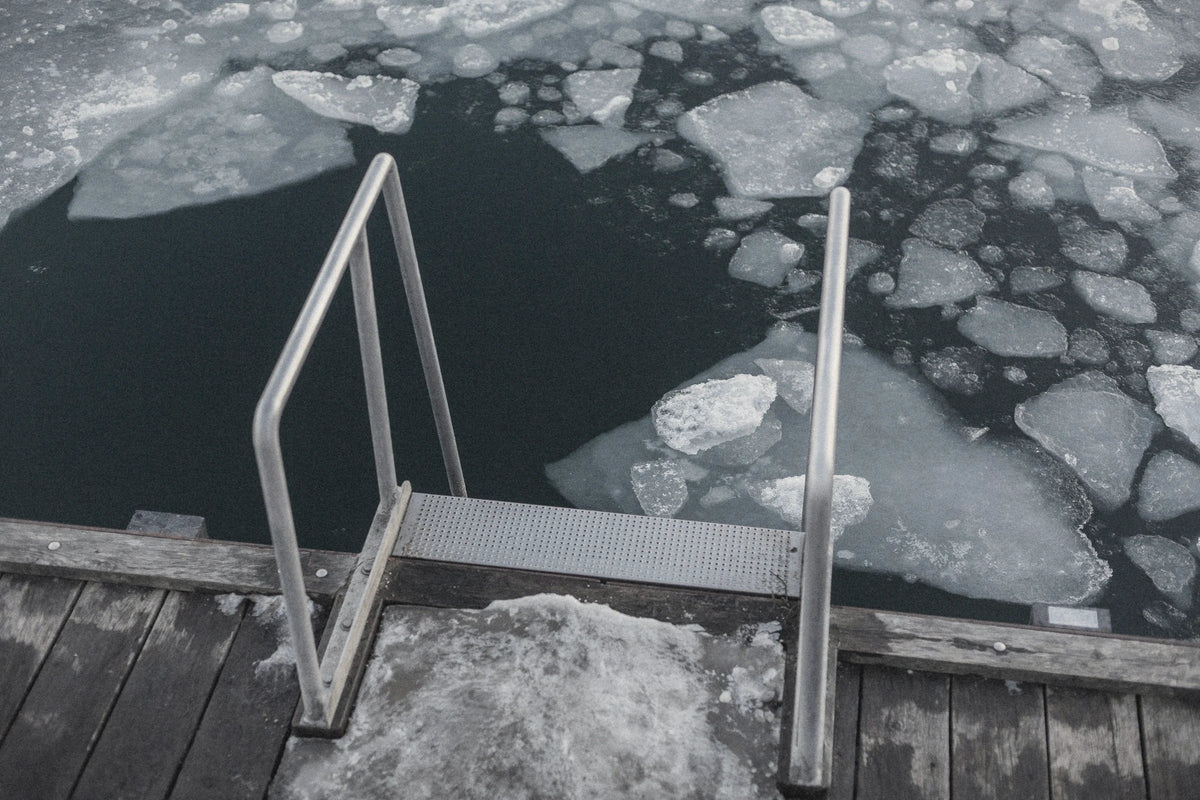
At the southern end of Bondi Beach, in Sydney, a fifty-meter pool sits on the rock shelf under the cliff, and when the swell is up the waves land in the lanes. In 1929 a group of local lifesavers formed a club so they could keep swimming through the winter and called themselves the Icebergs. The season runs from May to September, the cold months, and opens with the members jumping in together holding blocks of ice. Their constitution carries Rule 15B: to become a full swimming member you race three Sundays out of four for five years. Miss one and the club wants a letter of explanation before the end of the month. A full member called Benjamin told Broadsheet in 2012 that some Sundays he does not want to do it, not one bit, and that mid-race he can forget why the hell he is in the pool, it is so cold, and that getting out at the other end feels like achieving something.

Twelve kilometers north of Porto, the coast road at Leça da Palmeira runs along a shelf of black rock, and the pools are below it. Álvaro Siza was born in the next town along. He was not yet thirty when he drew them, and they opened in 1966. There are two pools, one deep, one for children, held in by low concrete walls he laid between the rocks that were already there, and the Atlantic fills the gaps. The changing rooms sit in a long low building whose flat roof meets the level of the road, so from the car you see almost nothing. You go down a ramp between concrete walls. The horizon drops out of sight, the sea becomes a sound, and at the last turn it is in front of you.
The architect Christian Gänshirt went to see Siza about the pools in 1988 and, by his own account in the 2022 book Sharing Memories, found him supportive and short of patience for talking about the project. Between 2019 and 2021 the town rebuilt the main tank, the pumps and the changing rooms, and Siza, in his late eighties, drew the repairs himself. The pools reopened in 2021 and close for the year in mid-September.
On the south shore of Dublin Bay, at Sandycove, a granite point called the Forty Foot drops into the Irish Sea. Concrete steps are cut into the rock, there is an iron rail, and the water is about six meters deep at high tide. The first stroke is taken in deep water. The county council says people have swum off this rock for 250 years without anyone building a wall or a pool, and the Sandycove Bathers' Association has looked after the steps since the 1880s.

For most of that time the place was men only, and often naked. On July 24, 1974, a dozen women walked down the steps with placards and swam. Nell McCafferty was one of them. Forty years later she told the Irish Times that the men gave them loads of sexist abuse, in language that was acceptable at the time.
The Forty Foot never closes. The regulars go in every morning of the year, in January in the dark, in rain, in a swell that climbs the steps. On Christmas morning the road down to the steps is full before nine. One of them told TheJournal.ie that the oldest of the group was ninety-one and had his cake and his cigarette before he got in.